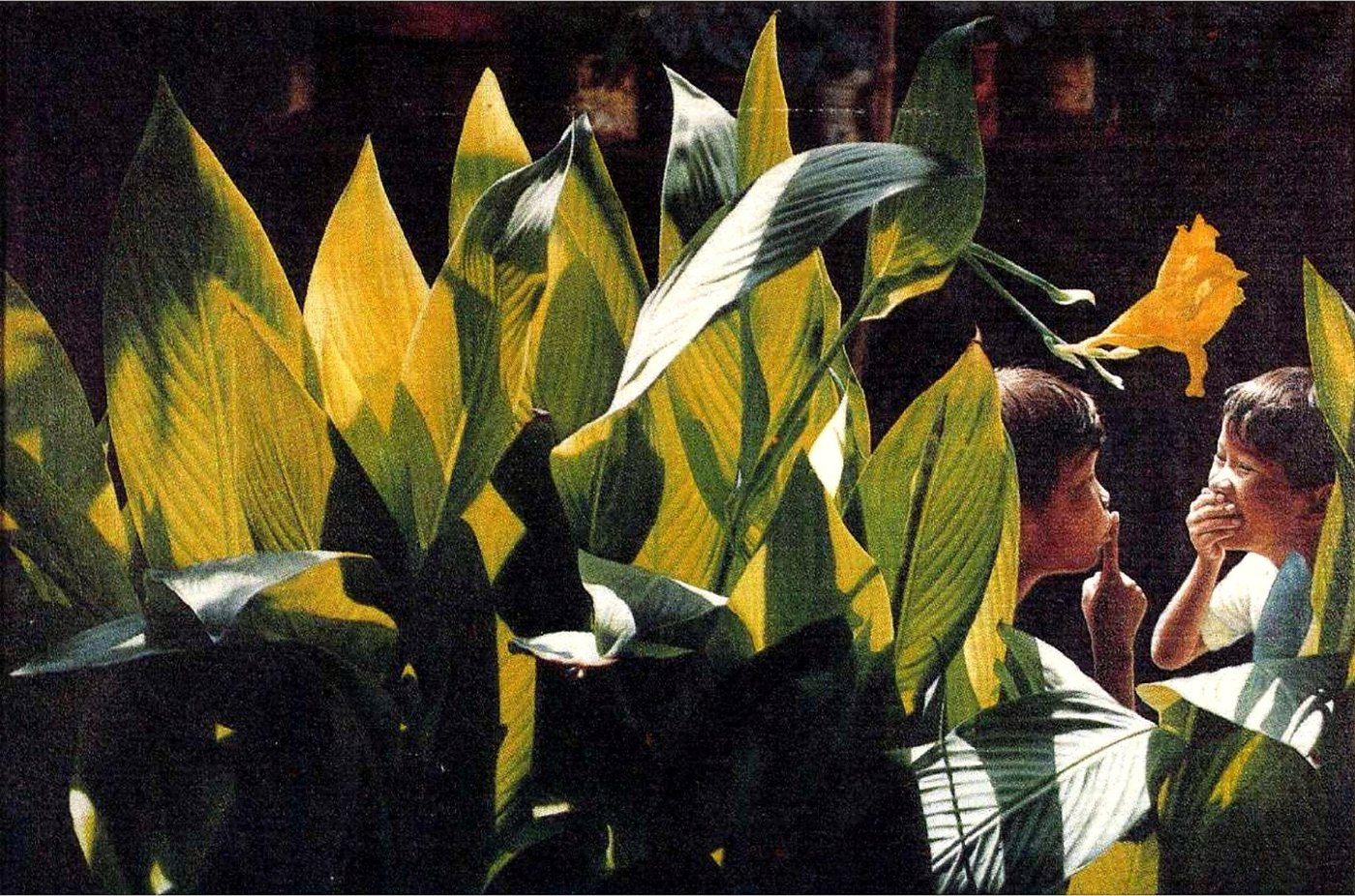
"He did not only make paintings. He made a method, wrote it down, taught it, and lived long enough to watch his students win with it."
Dr. Aladen S. Antiqueño has been an exhibiting Filipino painter for thirty-four years without interruption. He entered the national record in 1990 as a student finalist in the Shell National Students Art Competition, won its Grand Prize in 1992, and has not stopped working since. In 2025 he was conferred the first National Treasure for Visual Arts by the FAMAS Prestige Awards; in the same year he mounted a solo exhibition at ArtistSpace, Ayala Museum.
What distinguishes Dr. Antiqueño is that he did something Philippine visual art has produced very rarely: he identified a method in his own studio practice, named it, wrote it down, built it into an accredited curriculum, and transmitted it to a generation of students who are now winning the same national competitions he won as a young man. He converted a private technique into public inheritance.
From the 1990s, Dr. Antiqueño worked in a manner he formally named Composed Photorealism in 2010. The painter photographs subjects across different times and places, composes them into a single pictorial scene that reads as one moment in one location, and renders the result with photorealist precision. The finished painting is a constructed reality: coherent to the eye, emotionally unified, and impossible to have photographed. He is credited in national press as the Father of Composed Photorealism, and internationally, in the Art Renewal Center's atelier record, as having founded it.
The method is not neutral. Its subject is the Filipino child — at play, in tropical light, among leaves, inside games and rituals that are disappearing from Philippine childhood. Where the international photorealists of the 1960s turned their precision on chrome and the urban surface, Dr. Antiqueño turned the identical technical rigor on Filipino innocence and Filipino landscape. He did not import a style; he took its most demanding technical apparatus and made it serve Filipino memory.
Dr. Antiqueño is co-founder of GK College of Business, Arts and Technology and its Dean of Fine Arts since 2018; head of the GK Fine Arts Atelier (Art Renewal Center approved-school standing); co-founder of the GK Artists' Academy and GK Art Gallery; President and co-founder of UFAP; and co-founder of a fine arts school in Cadiz City, Negros Occidental. In 2021 he established the Antiqueño Scholarship for the Arts.
The strongest single fact in this nomination is not an award. It is a loop. Dr. Antiqueño won the Shell National Students Art Competition Grand Prize in 1992. His own students, trained in his method at institutions he built, now return to national student competitions and take Grand and Major prizes. One of them, Ranier Bolivar, has come back to teach in the atelier that trained him.
| Gawad CCP consideration | Evidence in this nomination |
|---|---|
| Minimum 20 years of practice | 34 years, unbroken: 1992 Shell NSAC Grand Prize → 2026 Legacy 24, Manila Hotel |
| A consistent body of outstanding work | Solo and legacy exhibitions across three decades; ArtistSpace, Ayala Museum (2025); The Manila Hotel (2025) |
| A distinct style or technique enriching the art form | Composed Photorealism — named 2010, taught since 2018, attributed by Art Renewal Center internationally |
| Work that influences other artists | Accredited BFA curriculum; ARC-approved atelier; students winning national competitions; former student now on faculty |
| Willingness to share and pass on expertise | Four published books; Legacy exhibitions with mentees; free workshops across three island groups; scholarship program |
| Cultural work in research, management, administration | Dean and co-founder, GK College; President, UFAP; DTI-BPS Technical Committee on AI |
| National attention | The Manila Times feature (26 December 2025); FAMAS Prestige National Treasure for Visual Arts (2025) |
For a lifetime given to the proposition that Filipino craft is worth teaching, and that a technique kept to oneself is a technique half-made.
There are painters who master a surface. There are teachers who master a room. Aladin Antiqueño did the rarer thing: he made a way of painting, and then he made it belong to other people.
For thirty-four years he has painted the Filipino child — in tropical light, among leaves, inside the games that a country is quietly forgetting. He photographs them across separate days and places, and then, on canvas, he composes them into a single unbroken moment that never happened and could not have been photographed. He named this method Composed Photorealism. It asks for the patience of a realist, the eye of a photographer, and the memory of someone who refuses to let a childhood disappear.
He did not keep it. He wrote it into four books. He built it into a curriculum. He founded schools — in Mandaluyong, and in Cadiz City, his mother's town, so that a child in Negros need not come to Manila to learn to draw. He opened galleries so that students would see their work on a wall and not only in a classroom. He carried free workshops to barangays, to persons with disabilities, to indigenous communities, carrying the materials with him.
In 1992 he won the Shell National Students Art Competition. Three decades later his own students walk into that same competition and win it. He hangs his paintings beside theirs and calls the exhibition Legacy. One of them now teaches in the atelier that taught him.
the Cultural Center of the Philippines confers upon
DR. ALADEN S. ANTIQUEÑO
the GAWAD CCP PARA SA SINING for Visual Arts.
For thirty-four years of unbroken practice; for originating and naming Composed Photorealism, an original Filipino method that renders the vanishing world of Filipino childhood with photorealist precision; for codifying that method in four books and an accredited curriculum rather than guarding it; for founding the schools, galleries, and scholarships through which Filipino artists are formed; and for students who now win the national competitions he once won.
Continue to the full Biography, or explore the Masterpieces that anchor this case.